Tinnitus Trigger Tracking
July 25, 2026
Almost everyone with tinnitus has a theory about what sets theirs off. Almost nobody has evidence. Tinnitus fluctuates on its own, memory attaches causes after the fact, and the result is a lot of people cutting out coffee and salt for nothing while missing the thing that actually matters. A tinnitus diary fixes that - but only if you build it to answer a question rather than to collect numbers.

Why your intuition about triggers is probably wrong
Tinnitus varies substantially day to day with no identifiable cause. That natural variation is the problem, because the human brain is excellent at finding explanations for it and terrible at checking them.
Three specific traps:
- Recall bias. You remember the bad night after a glass of wine. You do not remember the four bad nights with no wine, or the wine that preceded a fine night.
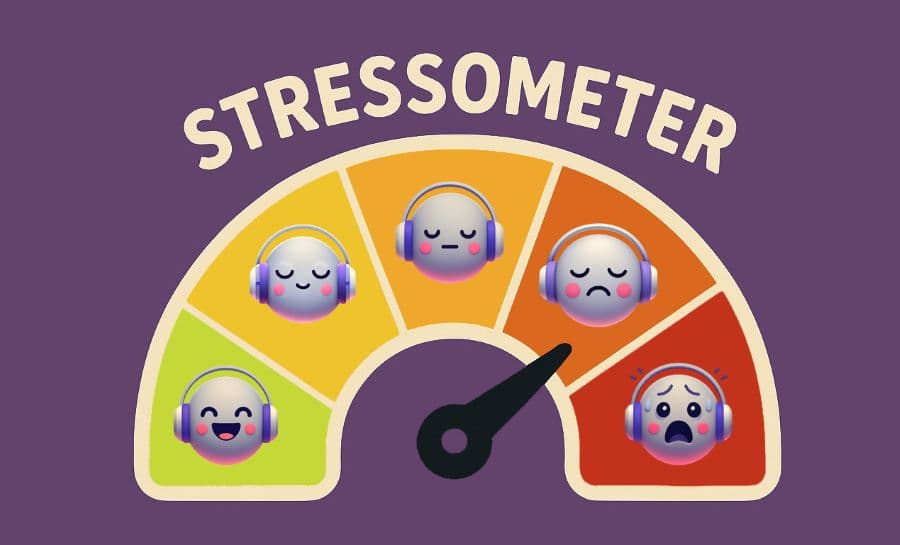
- Reverse causation. You assume stress made your tinnitus loud. Often the loud tinnitus made you stressed - see tinnitus as a stress-o-meter.
- Regression to the mean. Whatever you tried on the worst day gets credit for the improvement that was going to happen anyway.
A diary does not make you more objective. It just removes memory from the equation.
What to actually log
The temptation is to track everything. Resist it: elaborate trackers get abandoned in nine days, and nine days of data is worthless. Keep it to what fits in thirty seconds, once a day, at roughly the same time.
| Field | Scale | Why it earns its place |
|---|---|---|
| Loudness | 0-10 | The raw perception |
| Bother | 0-10 | Tracks separately from loudness, and predicts wellbeing |
| Hours slept | Number | The most consistently reported influence |
| Stress | 0-10 | The second most consistent |
| Caffeine / alcohol | Rough count | The two most commonly blamed, rarely tested |
| Loud noise exposure | Yes / no | Gigs, tools, headphones - the one with real physical risk |
| Note | One line | Illness, medication change, travel, anything unusual |
Rate loudness and bother separately. This is the single most useful thing in the whole exercise. They move independently, and it is entirely normal to have a loud day that barely registers and a quiet day that ruins your mood. When treatment works - CBT especially - bother usually falls long before loudness does. If you only track loudness, you will conclude nothing is helping.
How long, and how to read it
Track for four weeks before drawing any conclusion. Three is the bare minimum. Anything shorter and you are reading random variation.
When you review it, do not scan for bad days and look for a culprit - that is the recall trap with extra steps. Instead:
- Compare averages, not incidents. Average loudness on nights after fewer than six hours' sleep versus more than seven. If the gap is under a point, it is probably nothing.
- Look one day back. Many influences show up with a lag. Last night's sleep affects today; today's stress may affect tomorrow.
- Count how often your suspected trigger was present on good days. If caffeine appears on just as many good days as bad, it is exonerated.
- Expect most candidates to be innocent. A month of data usually clears more suspects than it convicts, and that is a genuinely useful result - it means you can stop restricting things for no reason.
The pattern almost everyone finds
Worse in the evening, better in the morning. This shows up so consistently that it is worth naming in advance: your surroundings get quieter as the day ends, so there is less ambient sound masking the tinnitus, and accumulated fatigue lowers your tolerance. It is a normal daily curve, not deterioration - and knowing that in advance takes a surprising amount of fear out of the evenings.
What a finished month usually looks like
To make that concrete, here is the shape a four-week log tends to take. The numbers are illustrative rather than taken from one person, but the pattern is the one people most often land on:
| Week | Avg loudness | Avg bother | Avg sleep |
|---|---|---|---|
| 1 | 6.1 | 5.8 | 6.2 h |
| 2 | 5.9 | 6.4 | 5.8 h |
| 3 | 6.0 | 3.9 | 7.4 h |
| 4 | 5.8 | 3.5 | 7.6 h |
Loudness barely moves. Bother almost halves. Sleep is the column that moves with it.
This is the most common result, and the one people are least prepared for, because most start a diary hoping to identify a food or drink to eliminate. What the data usually says instead is that the sound itself is fairly stable and your capacity to tolerate it is what fluctuates - which sounds like bad news and is actually the opposite, because tolerance is far more treatable than the sound.
It is also why the diary is worth keeping honestly rather than optimistically. If you only record the days you remember as notable, you rebuild the exact recall bias the exercise exists to remove.
Three mistakes that ruin a diary
- Logging after a bad night instead of daily. Event-triggered logging guarantees a dataset made entirely of bad days, with nothing to compare them against.
- Adding fields as you go. A column that starts in week three cannot be compared with weeks one and two. Decide the fields up front and leave them alone.
- Changing several things at once. If you cut caffeine, start a sound app and fix your bedtime in the same week, a month of data will not tell you which one did anything. Change one variable at a time, and give each a fortnight.
The triggers worth testing (and what the evidence says)
- Sleep - the most consistently reported influence, and bidirectional: poor sleep worsens tinnitus and tinnitus wrecks sleep. Worth attacking first.
- Stress - well established, same loop. This is why the interventions that work are psychological rather than acoustic.
- Loud noise - the one trigger with unambiguous physical risk. Protect your hearing; this one does not need testing.
- Caffeine - population studies have generally failed to find a link, and abrupt withdrawal causes its own symptoms. Test before cutting.
- Alcohol - commonly reported, plausibly via sleep disruption and dehydration rather than directly.
- Salt and hydration - mostly relevant to Ménière's disease rather than tinnitus generally, though hydration is worth logging.
- Jaw and neck position - if yours changes when you clench your jaw or turn your head, that is somatosensory tinnitus and is worth flagging to a clinician, because it is often treatable.
- Medication - check anything new against the ototoxic list, and raise it with your prescriber rather than stopping on your own.

Paper, spreadsheet, or app?
All three work. What matters is that you complete it, not the medium.
- Paper by the bed has the best completion rate, because it is in the right place at the right time.
- A spreadsheet is the easiest to actually analyse - one row per day, and you can average columns in seconds.
- An app wins on reminders and charts. Several tinnitus apps include a tracker; check that you can export your data before committing months to one.
Whichever you choose, take it to your appointment. "It is worse some days" is hard for a clinician to work with. Four weeks of numbers showing your tinnitus tracks your sleep, or spikes with jaw clenching, changes the conversation entirely - and the same log is the honest way to tell whether a new treatment did anything.
When to stop tracking
Tracking has a real downside: it directs attention at your tinnitus every single day, and attention is part of what keeps it prominent. This is why tinnitus specialists rarely recommend logging forever.
Do a focused four to eight week block, answer your question, act on it, then stop. Pick it up again if something changes - a new treatment, a new medication, a sudden shift in your symptoms. Chronic daily monitoring of a symptom you are trying to habituate to works against you.
The goal is not a perfect dataset. It is a handful of decisions made on evidence instead of guesswork, and then getting back to living around the tinnitus rather than measuring it.
Frequently Asked Questions
What is a tinnitus trigger tracker?
A tinnitus trigger tracker, or tinnitus diary, is a simple daily log of how loud and how bothersome your tinnitus was, alongside the things that might affect it - sleep, stress, caffeine, alcohol, salt, noise exposure and medication. Tracked for a few weeks it reveals patterns that are invisible day to day, because tinnitus fluctuates naturally and memory reliably misattributes the cause.
How long do I need to track tinnitus to see a pattern?
Three to four weeks is the realistic minimum. Tinnitus varies substantially from day to day for no reason at all, so a handful of entries mostly captures noise rather than signal. Four weeks of once-daily logging gives you enough data points to see whether, for example, poor sleep genuinely precedes bad days or you just remember it that way.
What should I record in a tinnitus diary?
Keep it to six or seven fields you will actually complete: loudness out of ten, how much it bothered you out of ten, hours slept, stress out of ten, caffeine and alcohol, loud noise exposure, and a one-line note. Rate bother separately from loudness - they move independently, and bother is the one that predicts your quality of life.
Why is my tinnitus better in the morning and worse at night?
Two things usually explain it. Your environment gets quieter through the evening, so there is less ambient sound masking the tinnitus, and accumulated fatigue and stress through the day lower your tolerance for it. For most people this daily curve is normal rather than a sign of worsening - which is exactly the kind of thing a diary makes obvious.
Does caffeine make tinnitus worse?
For most people, the evidence says no - studies have generally failed to find a population-level link, and abrupt caffeine withdrawal can itself cause symptoms. But individual responses vary, and that is the point of tracking: rather than cutting coffee on general advice, log it for a month and find out whether it matters for you specifically.
References
- Tinnitus - managing symptoms - NIDCD, National Institutes of Health
- Clinical Practice Guideline: Tinnitus - American Academy of Otolaryngology-Head and Neck Surgery
- Tinnitus Functional Index and outcome measurement - American Tinnitus Association
 Written by